

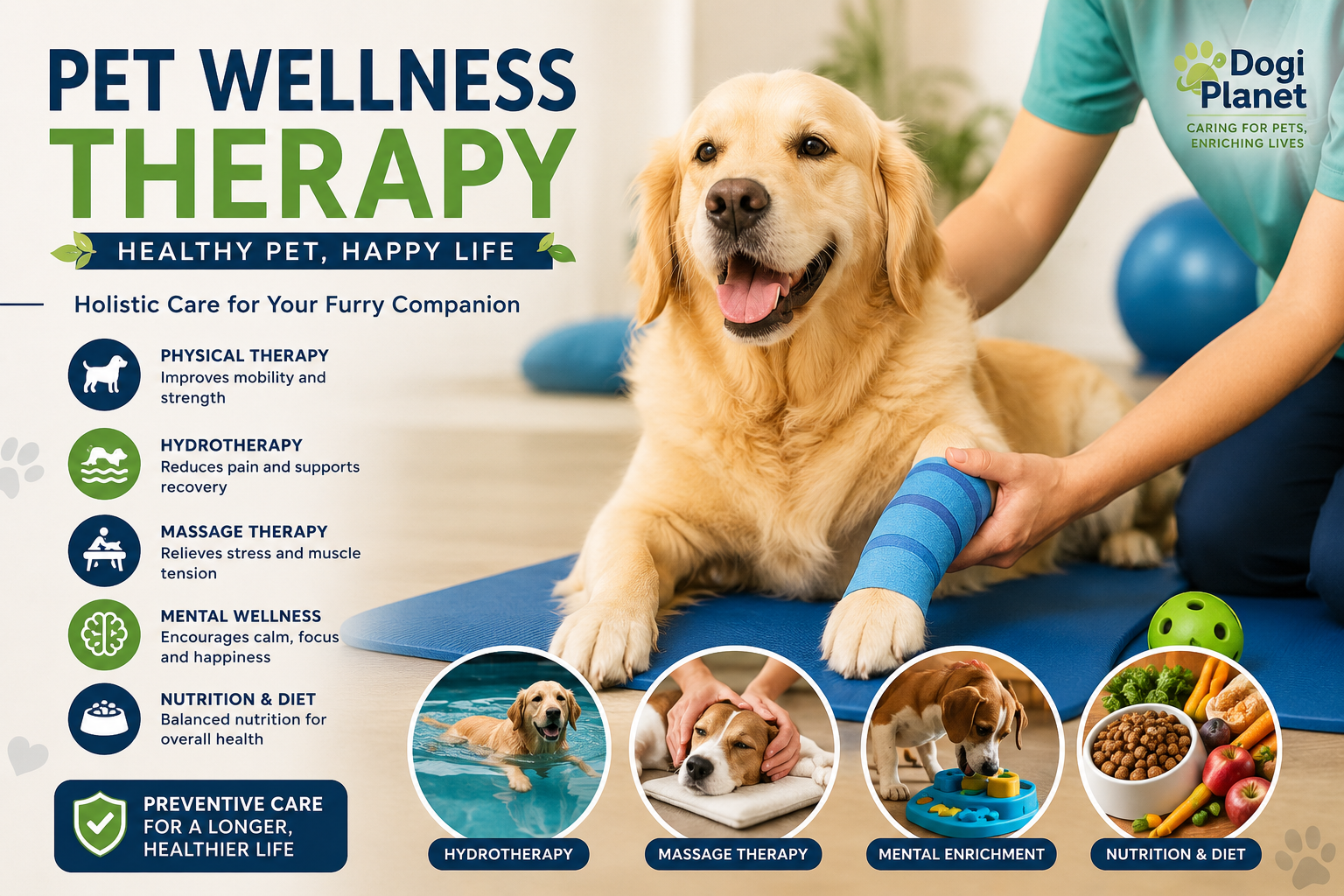
Premium pet wellness therapy by Dogi planet including hydrotherapy, massage, physical therapy, nutrition, and mental wellness tips for dogs at Dogi Planet.
Best Pet Wellness Therapy for Dogs and Pets | Dogi Planet
Premium Pet wellness therapy plays an important role in improving the physical and emotional health of dogs and other pets. At Dogi Planet, we believe that a healthy pet is a happy pet. From regular exercise and balanced nutrition to mental stimulation and stress management, pet wellness therapy helps pets live longer, healthier, and more comfortable lives.
Modern pet owners are becoming more aware of the importance of preventive care and holistic wellness for their furry companions. Pet wellness therapy focuses on maintaining overall health instead of only treating illnesses. It includes physical therapy, massage therapy, hydrotherapy, mental enrichment activities, nutrition planning, and regular veterinary care.

What Is Pet Wellness Therapy?
Pet wellness therapy is a combination of treatments and healthy lifestyle practices designed to support a pet’s physical fitness, emotional well-being, and long-term health. Wellness therapies are commonly used for:
- Senior dog care
- Recovery after surgery or injury
- Stress and anxiety management
- Weight control and mobility improvement
- Joint pain and arthritis relief
At Dogi Planet, we encourage pet owners to create wellness routines that keep dogs active, mentally stimulated, and emotionally balanced.
Benefits of Pet Wellness Therapy
Improved Physical Health
Wellness therapy helps maintain healthy muscles, joints, and body weight. Activities such as walking, swimming, and therapeutic exercises improve flexibility and strength.
Better Mental and Emotional Well-Being
Mental stimulation through games, training, and social interaction helps reduce anxiety, boredom, and destructive behavior in dogs.
Pain Management for Senior Pets
Older dogs often suffer from arthritis and mobility issues. Pet wellness therapies such as massage and hydrotherapy can improve comfort and movement.
Faster Recovery After Injury
Therapeutic exercises and rehabilitation programs support healing after surgeries or injuries.
Popular Types of Pet Wellness Therapy
Hydrotherapy for Dogs
Hydrotherapy uses water-based exercises to improve mobility, reduce joint stress, and build muscle strength. It is especially beneficial for senior dogs and pets recovering from injuries.
Benefits of Hydrotherapy
- Improves flexibility and balance
- Reduces joint pressure
- Helps with weight management
- Supports post-surgery recovery
Pet Massage Therapy
Massage therapy helps improve blood circulation, reduce stress, and relax muscles in dogs.
Benefits of Pet Massage
- Relieves muscle tension
- Promotes relaxation
- Reduces anxiety
- Supports joint health
Physical Therapy for Dogs
Physical therapy includes guided exercises that improve movement and strengthen muscles.
Why Physical Therapy Matters
- Helps dogs regain mobility
- Improves coordination
- Supports arthritis management
- Enhances quality of life
Mental Wellness and Enrichment Activities
Mental wellness is just as important as physical health. Puzzle toys, obedience training, social interaction, and interactive games keep dogs mentally active and emotionally healthy.
Mental Wellness Tips
- Daily playtime
- Positive reinforcement training
- Interactive feeding toys
- Regular walks and socialization
Pet Nutrition and Wellness
A balanced diet is essential for pet wellness therapy. Nutritious food supports healthy skin, digestion, immune function, and energy levels.
Healthy Nutrition Tips for Dogs
- Provide high-quality protein
- Maintain proper hydration
- Avoid overfeeding
- Include vet-approved supplements when necessary
Why Preventive Pet Care Is Important
Preventive care helps detect health problems early and reduces long-term medical complications. Regular vet visits, vaccinations, grooming, and wellness checkups are essential parts of responsible pet ownership.
At Dogi Planet, we provide expert advice on pet wellness therapy, dog care, nutrition, grooming, training, and senior pet health to help every pet live a healthier and happier life.
Grooming, Health, and Happiness
Pet wellness therapy By Dogi Planet Being a pet parent is one of life’s greatest joys, but it comes with a big responsibility: keeping your furry, feathered, or scaled friends in peak condition. While we often think of “grooming” as just making a pet look cute for photos, it is actually a cornerstone of their physical health.
Here is a breakdown of how to manage grooming and health for every type of pet in your home.
1. The Essentials of Dog Grooming
Dogs are the most diverse group when it comes to grooming needs.
- Coat Care: Long-haired breeds (like Poodles or Golden Retrievers) need daily brushing to prevent painful mats. Short-haired breeds (like Labradors) still benefit from weekly brushing to remove dander and loose fur.
- Paw Maintenance: Overgrown nails can cause skeletal issues. If you hear “clicking” on the floor, it’s time for a trim.
- Dental Hygiene: Use dog-specific toothpaste twice a week. Dental health is directly linked to heart health in canines.
2. Cat Care: More Than Just Self-Cleaning
Cats are meticulous cleaners, but they still need a helping hand.
- Brushing: Even short-haired cats need brushing to reduce the amount of fur they swallow, which prevents dangerous hairballs.
- Skin Checks: Cats are masters at hiding pain. Regular grooming sessions are the best time to check for lumps, bumps, or “flea dirt” (small black specks) on their skin.
- Ear Cleaning: Check for a coffee-ground-like discharge, which usually indicates ear mites—a common but treatable feline health issue.
3. Small Mammals (Rabbits, Guinea Pigs, Hamsters)
These “pocket pets” have unique requirements:
- Continuous Growth: A rabbit’s teeth never stop growing. Providing constant access to Timothy hay is essential for “grooming” their teeth down naturally.
- Scent Gland Cleaning: Rabbits and guinea pigs have scent glands that can become clogged and infected if not checked periodically.
- No Baths: Never submerge a small mammal in water unless directed by a vet; the stress and temperature drop can be fatal.
4. Birds and Reptiles
- Birds: Feather health is vital. Provide a shallow dish for “bird baths” or use a fine-mist spray bottle to help them preen. Keep an eye on their beak—if it looks overgrown or flaky, they may need more enrichment toys or a vet visit.
- Reptiles: Health is all about the environment. Proper humidity ensures a clean “shed.” If a snake or lizard has retained skin (especially around the eyes or toes), it can lead to circulation loss or infection.
General Health Red Flags
Regardless of the species, keep an eye out for these “Big Three” warning signs:
- Changes in Appetite: Refusing food for more than 24 hours is often the first sign of illness.
- Lethargy: If your normally active pet is suddenly hiding or sleeping excessively, something is wrong.
- Bathroom Habits: Straining, frequency changes, or diarrhea are immediate red flags.
Conclusion
Grooming is the best form of preventative medicine. It allows you to spot problems—like a new mole, a tick, or a sore spot—before they become expensive emergencies. By staying consistent with these routines, you aren’t just making your pet look good; you’re giving them a longer, more comfortable life.
Are you looking for advice on a specific breed or a particular health concern like allergies or senior care?
Dog Breed Advice for Pet Owners | Dogi Planet
Get expert dog breed advice from Dogi Planet. Discover the best dog breeds for families, apartments, seniors, and first-time owners with health and care tips.
Dog Breed Advice by Dogi Planet
Choosing the right dog breed is one of the most important decisions for any pet owner. At Dogi Planet, we help you find the perfect furry companion based on your lifestyle, home environment, activity level, and family needs. Whether you are looking for a small apartment-friendly dog, a loyal guard dog, or a playful family pet, understanding different dog breeds can help you make the best choice.
Different dog breeds have unique personalities, grooming requirements, exercise needs, and health considerations. For example, energetic breeds like Border Collies and Labrador Retrievers need daily exercise and mental stimulation, while breeds like Pugs and Shih Tzus are better suited for relaxed indoor living. Families with children often prefer friendly and patient breeds such as Golden Retrievers or Beagles.
Before adopting a dog, consider factors such as size, temperament, training needs, shedding levels, and potential health issues. Some breeds are more suitable for first-time owners, while others require experienced handling and consistent training. Dogi Planet provides expert guidance on puppy care, breed comparisons, nutrition, grooming tips, and senior dog care to help every dog owner raise a happy and healthy pet.
If you are searching for reliable dog breed advice, Dogi Planet offers detailed breed profiles, health guides, and practical pet parenting tips designed for modern dog lovers.
FAQ Section
What is the best dog breed for families?
Golden Retrievers, Labradors, and Beagles are considered excellent family dog breeds due to their friendly and loyal nature.
Which dog breeds are best for apartments?
Pugs, French Bulldogs, Dachshunds, and Shih Tzus adapt well to apartment living.
Best Apartment-Friendly Dog Breeds | Dogi Planet
Best Apartment-Friendly Dog Breeds for Small Homes
Discover the best apartment-friendly dog breeds including Pugs, French Bulldogs, Dachshunds, and Shih Tzus. Learn care tips, temperament, and health advice from Dogi Planet. Living in an apartment does not mean you cannot enjoy the companionship of a loving dog. Many small and low-maintenance dog breeds adapt perfectly to apartment living because of their size, temperament, and moderate exercise needs. At Dogi Planet, we recommend breeds like Pugs, French Bulldogs, Dachshunds, and Shih Tzus for apartment owners looking for loyal and affectionate pets.
Why Some Dog Breeds Are Better for Apartments
Apartment-friendly dog breeds are usually smaller in size, quieter, and comfortable living in compact indoor spaces. These breeds typically require moderate exercise and are known for adapting well to city life and indoor environments.
Pugs – Friendly and Low-Maintenance Apartment Dogs
Pug dogs are one of the best choices for apartment living because of their calm and affectionate personality. Pugs love spending time with their owners and do not require excessive exercise. Their compact size makes them ideal for small apartments or urban homes.
Why Pugs Are Great for Apartments
- Small size and easy indoor living
- Friendly with children and families
- Moderate exercise needs
- Adapt well to indoor lifestyles
Pug Care Tips
Pugs can be sensitive to heat because of their short noses, so owners should keep them cool during hot weather and avoid over-exercising.
French Bulldogs – Quiet and Adaptable Companions
French Bulldog dogs are popular among apartment owners because they are quiet, affectionate, and easygoing. They rarely bark excessively, making them suitable for shared living spaces.
Benefits of French Bulldogs for Apartment Living
- Minimal barking
- Low grooming requirements
- Excellent companion dogs
- Comfortable in smaller spaces
French Bulldog Health Considerations
French Bulldogs may experience breathing difficulties due to their flat faces, so regular vet checkups and moderate exercise are important.
Dachshunds – Small Dogs with Big Personalities
Dachshund dogs are energetic and loyal pets that fit well in apartments. Their small body size makes them ideal for compact homes, although they still enjoy daily walks and playtime.
Why Dachshunds Adapt Well to Apartments
- Compact and lightweight breed
- Strong bond with owners
- Moderate exercise needs
- Intelligent and playful personality
Dachshund Care Advice
Because of their long backs, Dachshunds should avoid jumping from furniture to reduce the risk of spinal injuries.
Shih Tzus – Calm Indoor Companion Dogs
Shih Tzu dogs are affectionate lap dogs known for their calm behavior and indoor-friendly nature. They thrive in apartments because they enjoy spending time indoors with their families.
Advantages of Shih Tzus for Apartment Owners
- Quiet and gentle temperament
- Minimal exercise requirements
- Excellent companion pets
- Suitable for seniors and families
Grooming Needs of Shih Tzus
Shih Tzus require regular grooming to maintain their long coats and prevent matting.
How to Choose the Right Apartment Dog Breed
Before choosing a dog breed for apartment living, consider:
- Size of your apartment
- Daily exercise routine
- Noise tolerance
- Grooming commitment
- Family and lifestyle needs
At Dogi Planet, we help dog lovers find the best apartment-friendly breeds with expert advice on dog care, nutrition, training, and health.
How do I choose the right dog breed?
Consider your lifestyle, activity level, living space, grooming commitment, and experience with pets before choosing a dog breed.
Are some dog breeds easier to train?
Yes, breeds like Labrador Retrievers, Poodles, and German Shepherds are known for their intelligence and trainability.
Are Some Dog Breeds Easier to Train? | Dogi Planet
Discover the easiest dog breeds to train including Labradors, German Shepherds, Poodles, and Golden Retrievers. Get expert training tips from Dogi Planet.
Are Some Dog Breeds Easier to Train?
Yes, some dog breeds are naturally easier to train because of their intelligence, obedience, and eagerness to learn. At Dogi Planet, we believe choosing a trainable dog breed can make pet ownership easier, especially for first-time dog owners and families. Certain breeds respond quickly to commands, enjoy mental stimulation, and adapt well to structured training routines.
Why Some Dog Breeds Are Easier to Train
Dog breeds with high intelligence and strong loyalty often learn commands faster than independent or stubborn breeds. Easy-to-train dogs usually have:
- Strong focus and attention span
- Desire to please their owners
- High intelligence levels
- Good social behavior
- Quick response to positive reinforcement
Consistent training, patience, and rewards are important for every breed, but some dogs naturally excel in obedience training.
Labrador Retrievers – Friendly and Highly Trainable
Labrador Retriever dogs are one of the easiest breeds to train because of their intelligence and friendly personality. Labradors are widely used as service dogs, therapy dogs, and family pets due to their ability to learn commands quickly.
Why Labradors Are Easy to Train
- Intelligent and obedient
- Respond well to rewards
- Friendly with families and children
- Excellent for first-time dog owners
Training Tips for Labradors
Use positive reinforcement methods such as treats and praise to keep training sessions fun and effective.
German Shepherds – Intelligent Working Dogs : Dogi planet
German Shepherd dogs are known for their loyalty, confidence, and advanced learning abilities. They are commonly trained for police work, security, and rescue operations.
Benefits of Training German Shepherds
- Quick learners
- Strong protective instincts
- Excellent obedience skills
- Highly focused during training
German Shepherd Training Advice
Early socialization and regular mental stimulation help German Shepherds become disciplined and well-behaved companions.
Poodles – Smart and Adaptable Pets
Poodle dogs are among the most intelligent dog breeds in the world. They are energetic, alert, and highly responsive to commands.
Why Poodles Learn Quickly
- High intelligence level
- Easy command recognition
- Strong adaptability
- Great for agility and obedience training
Poodle Care and Training
Daily exercise and interactive activities help keep Poodles mentally stimulated and happy.
Golden Retrievers – Patient and Family-Friendly Dogs
Golden Retriever dogs are gentle, loyal, and eager to please, making them one of the best breeds for obedience training.
Golden Retriever Training Benefits
- Calm and patient temperament
- Friendly with children
- Fast learners
- Great emotional support companions
Training Tips for Golden Retrievers
Short, positive training sessions combined with playtime produce the best results.
Border Collies – Extremely Intelligent and Active
Border Collie dogs are considered one of the smartest dog breeds. They learn commands rapidly and excel in advanced training activities.
Why Border Collies Are Easy to Train
- Exceptional intelligence
- High energy and focus
- Excellent problem-solving skills
- Strong work ethic
Border Collie Exercise Needs
Border Collies require daily physical activity and mental challenges to prevent boredom.
Best Dog Training Tips for Beginners
No matter which breed you choose, successful dog training depends on consistency and patience. Follow these simple training tips:
- Start training early
- Use positive reinforcement
- Keep sessions short and fun
- Reward good behavior immediately
- Maintain a regular routine
At Dogi Planet, we provide expert dog training advice, breed guides, puppy care tips, and pet health resources to help dog owners raise happy and obedient pets.
FAQ Section
Which dog breed is easiest to train?
Labrador Retrievers, Poodles, German Shepherds, and Golden Retrievers are considered some of the easiest dog breeds to train.
Are small dogs harder to train?
Some small dog breeds can be stubborn, but with consistent training and patience, they can learn effectively.
What is the best age to start dog training?
Puppy training should ideally begin between 8 and 12 weeks of age for the best results.
Do intelligent dog breeds need more mental stimulation?
Yes, highly intelligent breeds like Border Collies and Poodles require mental exercises and regular activities to stay happy and healthy.
Which Dog Breed Is Easiest to Train? | Dogi Planet
Discover the easiest dog breeds to train including Labrador Retrievers, Golden Retrievers, Poodles, and German Shepherds. Expert dog training tips from Dogi Planet.Which Dog Breed Is Easiest to Train?
Choosing a dog that is easy to train can make pet ownership more enjoyable, especially for first-time dog owners and families. Some dog breeds are naturally intelligent, obedient, and eager to please, making them quicker learners during training sessions. At Dogi Planet, we recommend understanding a breed’s temperament, energy level, and learning ability before bringing a dog home.
Among the easiest dog breeds to train are Labrador Retrievers, Golden Retrievers, Poodles, German Shepherds, and Border Collies. These breeds respond well to commands, enjoy mental stimulation, and adapt quickly to structured routines.
Labrador Retrievers – One of the Best Easy-to-Train Dogs
Labrador Retriever dogs are widely considered one of the easiest breeds to train because of their intelligence, loyalty, and friendly nature. Labradors enjoy learning new commands and respond very well to positive reinforcement techniques.
Why Labrador Retrievers Are Easy to Train
- Highly intelligent and obedient
- Friendly and eager to please
- Great for families and beginners
- Learn commands quickly
Training Tips for Labradors
Use treats, praise, and regular practice sessions to keep Labradors motivated and focused.
Golden Retrievers – Gentle and Obedient Family Dogs
Golden Retriever dogs are famous for their calm temperament and excellent learning abilities. They are patient, affectionate, and highly responsive during obedience training.
Benefits of Training Golden Retrievers
- Friendly and social personality
- Fast command recognition
- Excellent with children
- Ideal for therapy and support work
Golden Retriever Training Advice
Consistency and positive reinforcement help Golden Retrievers develop strong obedience skills.
Poodles – Highly Intelligent and Quick Learners
Poodle dogs rank among the smartest dog breeds in the world. They are energetic, alert, and capable of learning advanced commands and tricks.
Why Poodles Are Easy to Train
- Exceptional intelligence
- Strong memory and focus
- Adaptable to different environments
- Excellent agility training dogs
Poodle Exercise and Training
Mental stimulation and interactive games help Poodles stay engaged and well-behaved.
German Shepherds – Smart and Disciplined Working Dogs
German Shepherd dogs are known for their loyalty, confidence, and advanced obedience skills. They are commonly trained for police work, military tasks, and service roles.
German Shepherd Training Benefits
- Quick learners
- Strong focus and discipline
- Protective and loyal nature
- Excellent working abilities
Training Tips for German Shepherds
Start socialization early and maintain regular training routines for the best behavior results.
Border Collies – Extremely Intelligent and Active Dogs
Border Collie dogs are often considered the most intelligent dog breed. They learn commands rapidly and enjoy problem-solving activities.
Why Border Collies Learn Fast
- Outstanding intelligence
- High energy and focus
- Excellent problem-solving skills
- Strong obedience abilities
Border Collie Care Tips
Daily exercise and advanced training activities are important to prevent boredom and destructive behavior.
How to Successfully Train Any Dog Breed
Even easy-to-train dog breeds need patience, consistency, and positive reinforcement. Follow these simple training tips:
- Begin training early
- Use rewards and praise
- Keep training sessions short
- Practice commands daily
- Stay patient and consistent
At Dogi Planet, we provide expert advice on dog training, breed selection, puppy care, nutrition, and pet health to help dog owners raise happy and obedient companions.